

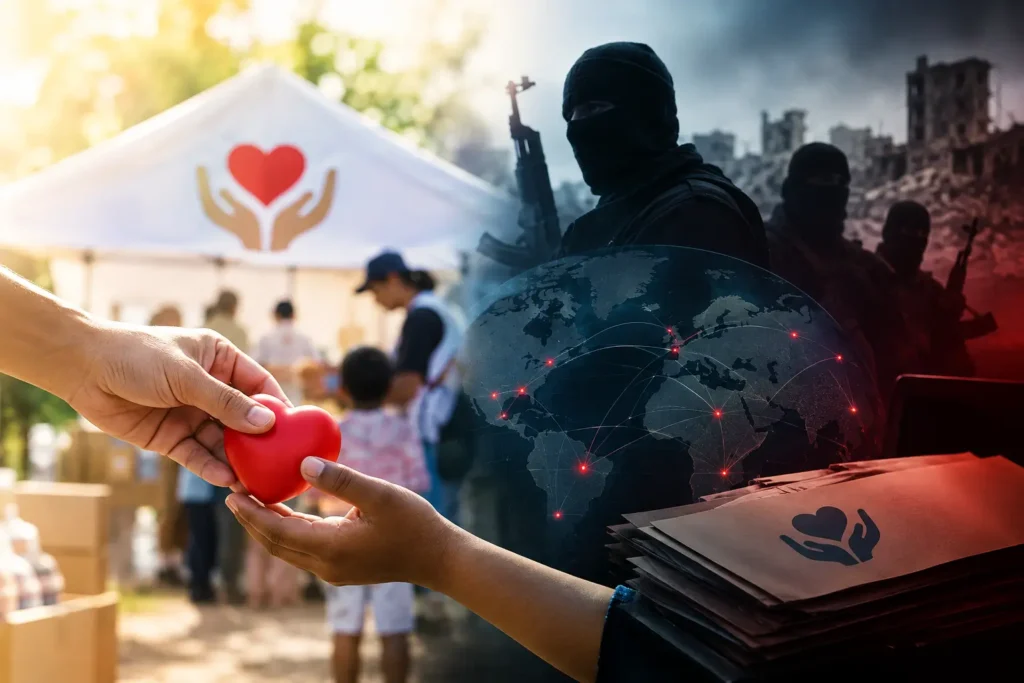
High-profile maritime initiatives that capture global headlines often present themselves as courageous, independent missions of mercy. Campaigns such as the Global Sumud Flotilla rely heavily on dramatic visuals, high-seas standoffs, and emotional social media mobilization to project an image of selfless human rights advocacy. Yet, beneath the idealistic rhetoric of breaking blockages and delivering life-saving aid lies a tightly coordinated operational apparatus with direct structural ties to militant geopolitics and organizations designated as global terror threats.
Security investigations and intelligence dossiers have repeatedly uncovered direct financial and operational links between maritime steering committees, front shipping entities, and extremist networks. Key individuals coordinating these high-profile boat missions often operate within overseas representative bodies, such as the Palestinian Conference for Palestinians Abroad (PCPA), which have been identified as frameworks designed to project the influence of Hamas, which is designated as a foreign terrorist organization by the United States, the European Union, the United Kingdom, Canada, Australia, Japan, Israel, and several other nations, onto the international stage. Rather than functioning as spontaneous civil society movements, these logistical operations are frequently directed by individuals answering directly to external leadership wings seeking to sanitize their public image.
The reliance on maritime theater rather than traditional logistics exposes the underlying motives of these campaigns. Genuine humanitarian aid is coordinated through heavily vetted, transparent international bodies utilizing established land corridors with precise paper trails and official manifests. In contrast, activist flotillas thrive on confrontation because drama generates digital outrage, and outrage translates directly into massive financial donations. Millions of dollars pour into decentralized organizing networks supposedly meant for vessel repairs and relief supplies, yet a significant portion is absorbed by administrative bloat, professional activism, and the political ambitions of organizers.
For the global community, recognizing these hidden structures is critical for maintaining the integrity of international security and humanitarian aid. Civil society organizations, donors, and maritime authorities must exercise rigorous due diligence to ensure that international solidarity initiatives are never hijacked to support violent extremism or ideological fronts. True advocacy demands protecting vulnerable populations while dismantling the sophisticated front networks that exploit human suffering for strategic geopolitical advantage.