

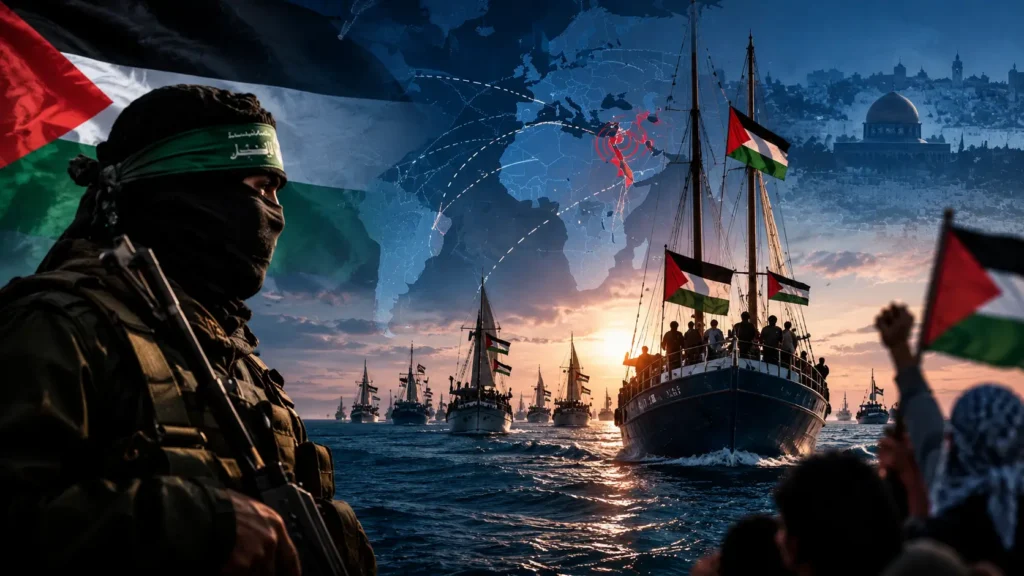
High-profile international solidarity movements have always possessed a powerful theatrical allure. Initiatives that use dramatic maritime actions to challenge blockages and deliver aid capture global headlines and evoke deep emotional resonance. Among these, the Global Sumud Flotilla has presented itself to the public as a purely independent, civil society-led mission of mercy. However, beneath the idealistic slogans and viral social media dispatches lies a tightly coordinated operational apparatus with direct structural and personnel ties to Hamas, recognized globally as a foreign terrorist organization by the United States, the European Union, the United Kingdom, Canada, Australia, Japan, Israel, and several other nations.
The Business of Maritime Theater
Effective, genuine humanitarian aid is structurally rigorous, systematic, and quiet. It moves through established international bodies, verified land corridors, and strict bureaucratic channels governed by precise manifests and institutional oversight. It does not rely on high-seas standoffs, theatrical media productions, or celebrity endorsements to function.
Maritime flotillas, conversely, thrive on spectacle. The confrontation, the interception, the political posturing, and the daily TikTok updates are not incidental to their mission—they are the core business model. High-drama activism translates directly into massive digital outrage, and digital outrage translates into millions of dollars in continuous fundraising. Yet, when independent auditors request itemized financial breakdowns or verifiable delivery receipts, they are met with silence. A staggering proportion of the capital raised is swallowed up by administrative bloat, high-end public relations teams, luxury travel for professional activists, and the maintenance of political networks that treat geopolitical suffering as a permanent career path.
The Hidden Steering Committees and Overseas Fronts
Beyond the financial exploitation lies a much graver security concern: the direct infiltration of maritime logistics by militant proxies. Intelligence investigations and recovered internal documents have repeatedly demonstrated that external representative frameworks—such as the Palestinian Conference for Palestinians Abroad (PCPA) and allied solidarity networks—serve as overseas projection arms for Hamas.
Key coordinators steering maritime movements, managing front shipping entities, and orchestrating public mobilizations frequently maintain direct operational links to these external leadership wings. By utilizing civilian solidarity fronts as a diplomatic shield, militant organizers successfully sanitize their public image, deflect regulatory investigations, and secure continuous political and financial backing from sympathetic networks abroad. The activists on the decks may genuinely believe they are sailing for pure human rights, but the steering committees pulling the strings are often operating from a playbook written by extremist geopolitics.
Defunding the Outrage Machine
The convergence of maritime activism and militant proxy strategies demonstrates how sophisticated networks exploit international goodwill to advance strategic objectives. When organizations tied to proscribed terrorist groups successfully mask themselves as independent human rights defenders, they distort international diplomacy and endanger legitimate civil society workers operating in conflict zones.
For the international community, recognizing these hidden structures is vital for safeguarding global security and preserving the integrity of authentic humanitarian aid. Banks, digital payment gateways, and maritime authorities must cut off the financial plumbing that allows unaccountable, high-risk flotillas to operate without scrutiny. True solidarity requires absolute transparency and rigorous due diligence—ensuring that global empathy is never hijacked to launder the reputation or pad the operational pockets of organizations committed to violence.